Film review / Na Hong-jin
Hope
Na Hong-jin’s sci-fi spectacle has a visual-effects problem. It also has the kind of unruly energy that makes perfection feel beside the point.
The most remarkable thing about Na Hong-jin’s Hope is how confidently it changes its mind. One minute it is a hard-charging survival thriller, the camera plunging through a forest as if it can barely keep up with the people running through it; the next it has wandered into a different genre altogether. The CGI creates a similar rupture, though with less success: an otherwise tactile sequence suddenly gives way to a creature that looks like it belongs to another universe. And yet these collisions are part of what makes Hope so magnetic. It is not smooth. It is alive.
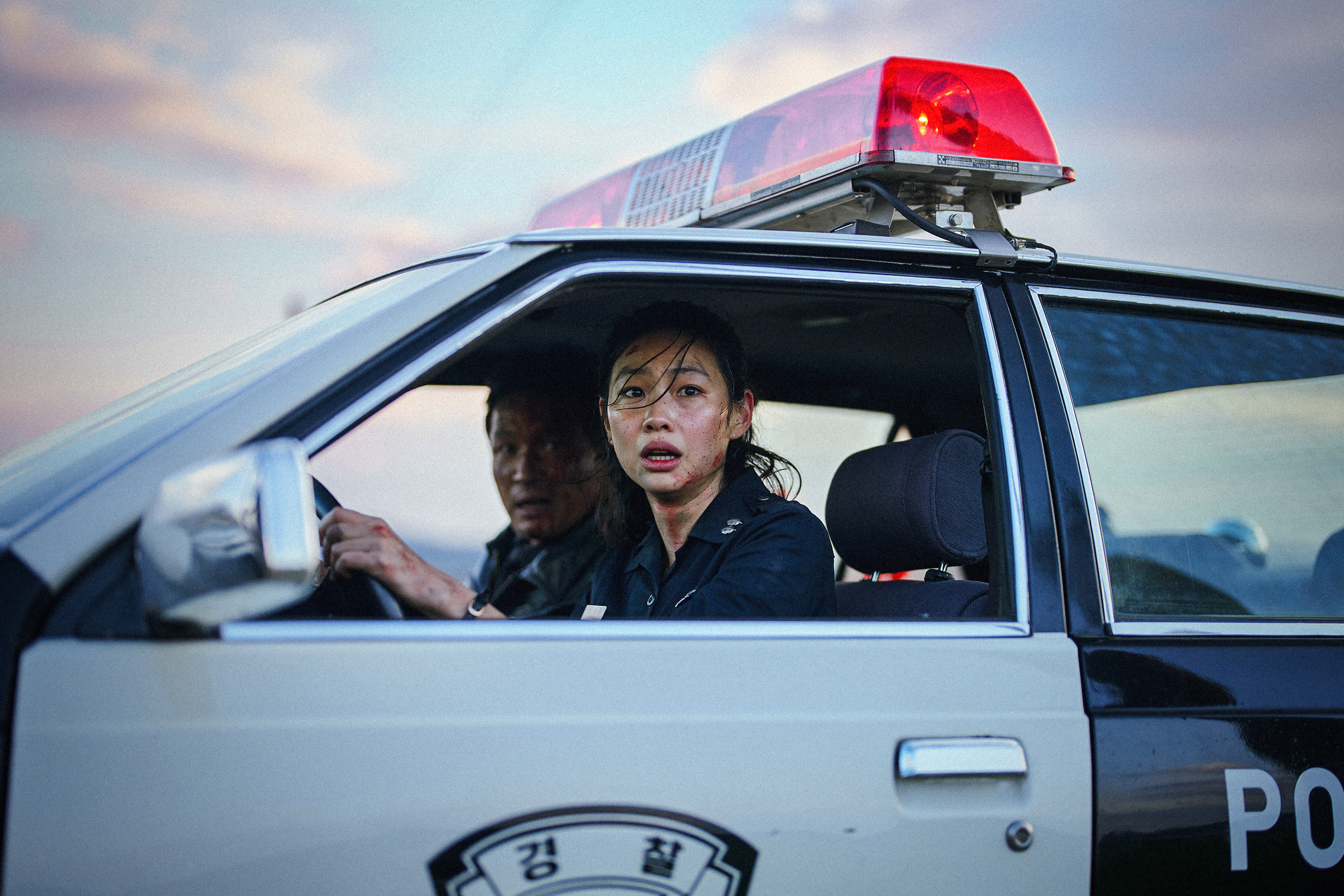
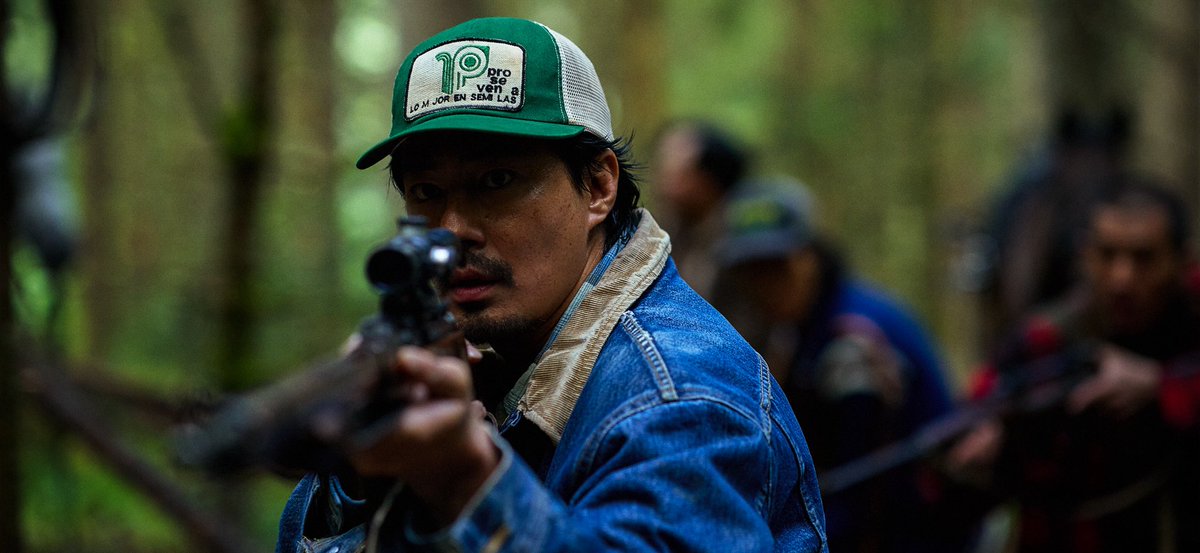
Set in Hope Harbor, a remote village near the DMZ, the film begins with a local emergency that no one has the luxury of understanding. A mutilated animal suggests something dangerous in the mountains. Reinforcements are diverted to fight wildfires, communications go down, and police outpost chief Bum-seok (Hwang Jung-min) and rookie officer Sung-ae (Hoyeon) are left to protect a village of elderly residents. In the mountains, hunter Sung-ki (Zo In-sung) leads a group of locals after the beast and discovers that the search has reversed direction. The setup is useful not because it explains the movie, but because it withholds enough explanation to make the first wave of chaos feel genuinely disorienting.
Those pleasures are considerable. Working with cinematographer Hong Kyung-pyo, Na stages the chases as problems in geography rather than simple displays of speed. In the forest, bodies slip behind trees and brush before reappearing on a line of movement the camera has only just discovered. On the roads, vehicles become moving barricades and traps; the interior of a car can feel briefly like shelter before the action tears open again. Na lets us register a route, then complicates it with a turn, a collision, a break in the tree line, or somebody choosing the only direction that looks available. Every chase has a little puzzle inside it. The rush comes from watching people solve it too late.
That physical clarity gives Hope its game-like energy—not because the film needs to announce what it resembles, but because it understands the nervous pleasure of learning a space by trying to survive it. The camera does not simply cover geography; it discovers it under pressure. A road, a tree line, or the interior of a vehicle becomes a problem to be solved at speed, and the staging makes each new movement feel like a decision with consequences. Even when the film is moving too quickly to admire every image, I always know what the bodies in it are trying to do.
The sets and locations give that movement its scale. Hope Harbor is not an empty sci-fi backlot waiting to be destroyed. Its village streets, police outpost, patrol vehicles, mountain roads, and forest edges feel like ordinary spaces that have been abruptly made hostile. The film can move from the cramped interior of a vehicle to the open mountains and make both environments feel unsafe for entirely different reasons. That contrast keeps the spectacle tethered to the people inside it. The danger is not happening in an abstract digital arena; it is invading a place with routines, limits, and a physical texture of its own.
The images have enough polish to invite admiration and enough momentum to prevent admiration from becoming a passive activity. Na’s action is beautiful without becoming precious. It has the blunt, immediate appeal of watching people run, shoot, crash, and generally have the worst day imaginable. Even when the film is reaching for spectacle, it keeps one foot in the body: the stumble, the recoil, the split-second calculation before somebody commits to the wrong direction.
Hoyeon is a particular delight. The sight of her wielding a machine gun delivers precisely the uncomplicated satisfaction it promises, but that satisfaction belongs to the film’s larger physical charge. She gives Sung-ae an alertness that makes every movement feel chosen, even when the situation has stopped allowing good choices. Hoyeon’s presence also keeps the mayhem from becoming anonymous. The film can get enormous around her, but it never forgets the pleasure of watching one person take command of a terrible moment.
Then Hope swerves. At one point, a character launches into a monologue so funny and so completely unannounced that the movie seems to have wandered into another genre for the length of a story. It works because Na lets it arrive with total conviction. The film’s tonal shifts are not always graceful, but they are rarely timid. Brutality, absurdity, deadpan comedy, and sudden sincerity can enter through any one of them. The movie’s personality comes from that willingness to let incompatible impulses share the same frame.
That appetite for collision is also what makes the visual effects so frustrating. Some of the CGI is startlingly poor, all the more conspicuous because the filmmaking around it is so assured. This is not an objection to visible artifice in itself. An impossible creature does not have to resemble documentary footage to belong in a film. It does, however, need some convincing relationship with the images around it. Hope sometimes loses that relationship entirely.
The creatures do not look wrong simply because they are digital. They look wrong because the rest of the movie has worked so hard to make danger feel physical. Hong’s camera gives the forest weight, the vehicles texture, and the people inside them a sense of vulnerable mass. Then an effect appears that seems insufficiently part of the same world. Instead of looking at the threat, I find myself looking at the attempt to create it. The illusion breaks—not catastrophically, but conspicuously.
After the screening, my good friend Jonathan offered a more generous interpretation: perhaps the rough CGI contributes something, lending the film a B-movie texture beneath its sleek surface. The thought has stayed with me. Not because the effects become secretly excellent if we find a sufficiently charitable explanation for them, but because his response makes sense of the affection that survived my objections. Hope is already a film of strange mixtures. Its scrappy edges can feel less like an error in its personality than an exposed seam in it.
That is not an alibi for the production, and it does not prove the roughness was intentional. The distinction matters. Some of the film’s tonal detours expand its imagination; the bad CGI often interrupts it because it draws attention away from the danger the scene has built. Both are departures from realism, but only one consistently feels like a choice the film is making rather than a problem it is asking me to overlook.
More importantly, I was never angry at Hope. A review focused on its effects can make the experience sound like a long exercise in forgiving them, when the actual balance was much more favorable. I was having a terrific time. The action, the striking images, the unexpected jokes, and the sheer appetite for excess supplied pleasures that an awkward effect could interrupt but never erase. The film kept earning back my attention without needing to persuade me that I had imagined its flaws.
With more convincing CGI, this could be a genuinely exceptional piece of science-fiction spectacle. As it stands, the qualification remains substantial, but so does the recommendation. Hope makes a useful mess of the idea that technical consistency determines how fully a movie can work on an audience. I can identify exactly what pulled me out of it. I am equally certain that I loved being pulled back in.
If and when another installment happens, I will be there. Ideally, the creatures will have caught up with the filmmaking, but I would not want Na to sand away the film’s appetite for strange turns, sudden laughter, and beautiful excess. Hope is a 3.5-star movie with the nerve of something I would happily follow into a sequel—and that is a more persuasive promise than perfection would have been.

Joshua Relyea
Founder and editor of Relyea on Film. Writing about new releases, international cinema, and the films worth returning to.