Film review / Zach Cregger
Resident Evil
Zach Cregger’s brisk reboot understands that the games are less about lore than momentum: move, panic, improvise, and pray the next door opens.
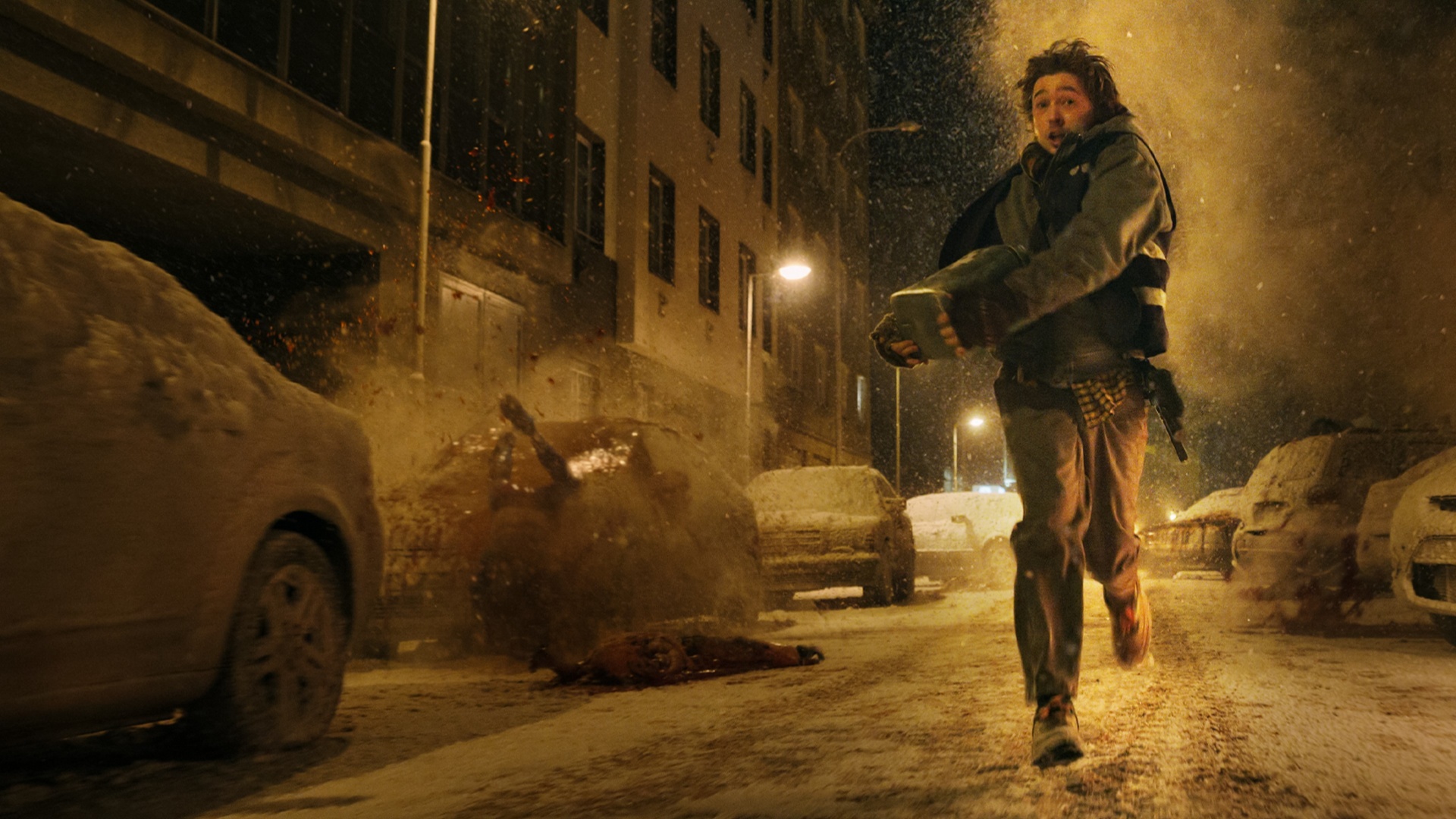
The best thing about Zach Cregger’s Resident Evil is that it understands the games as experiences before it treats them as a brand. The movie does not pause to hand us a map of Raccoon City or a tidy account of what went wrong. It drops its hero into trouble with roughly the same amount of information it gives us, then asks how long he can keep moving before the next bad decision catches up. The answer is: very quickly, and with considerable pleasure.
Bryan (Austin Abrams) is a medical courier whose desperate bid for double pay drops him into a city already coming apart. Eager to finish his shift during a severe snowstorm, he accepts a risky late-night delivery run. At first, the movie does not tell him—or us—what has happened. The emergency hits him head-on when his van strikes a mysterious woman in the road, forcing him out of the vehicle and straight into the path of sudden violence and chaos. Cregger and co-writer Shay Hatten let the explanation trail the panic, forcing us to navigate the outbreak with Bryan rather than receive it as a briefing. By the time the larger shape of the crisis comes into view, we have already learned its rules the hard way. That economy becomes the movie’s first real virtue. Resident Evil knows the audience came to watch a man move through hostile spaces, search for an exit, and discover that every apparent solution contains a fresh problem.
The film moves with a confidence that occasionally borders on impatience. It is not interested in wasting time on the kind of connective tissue that usually accumulates around a franchise reboot: extended mythology lessons, solemn declarations about destiny, or a parade of characters explaining the rules before the movie has had the chance to make us feel them. The story gets moving and keeps moving. There were moments when I wanted to stay in certain spaces a little longer, but I respected the refusal to confuse length with importance.
More important than the direct references is the shot language. Working with cinematographer Dariusz Wolski, Cregger gives the action a game-like urgency without reducing the film to a collection of Easter eggs. The camera turns corridors, streets, and rooms into problems to be solved. It tracks Bryan with the nervousness of a player trying to remember which door they passed five minutes ago, then snaps the space open just as he thinks he has found a way through. The effect is not that the movie is pretending to be a game. It is that the movie understands the particular panic of playing one.
That panic gives Resident Evil its rhythm. The movie knows that a hallway is never just a hallway, that a locked door is a promise, and that any object placed conspicuously in the background is probably going to become important at the least convenient possible moment. Its pleasures are tactile: a weapon that feels insufficient, a route that feels almost clear, a brief pocket of safety that arrives with an expiration date already printed on it. This is a film about forward motion, but it is also about the dread of knowing that forward motion is the only option.
Abrams is excellent at carrying that contradiction. Bryan is not a super-soldier or a preordained action hero. He is a guy trying to keep moving while the movie keeps presenting him with choices that would be questionable even under much better circumstances. Abrams plays his fear without turning him into a helpless audience surrogate, and he makes Bryan’s occasional flashes of competence feel earned rather than inevitable. The performance is appealing precisely because it leaves room for the character to be decent, selfish, brave, and completely baffling within the same evening.
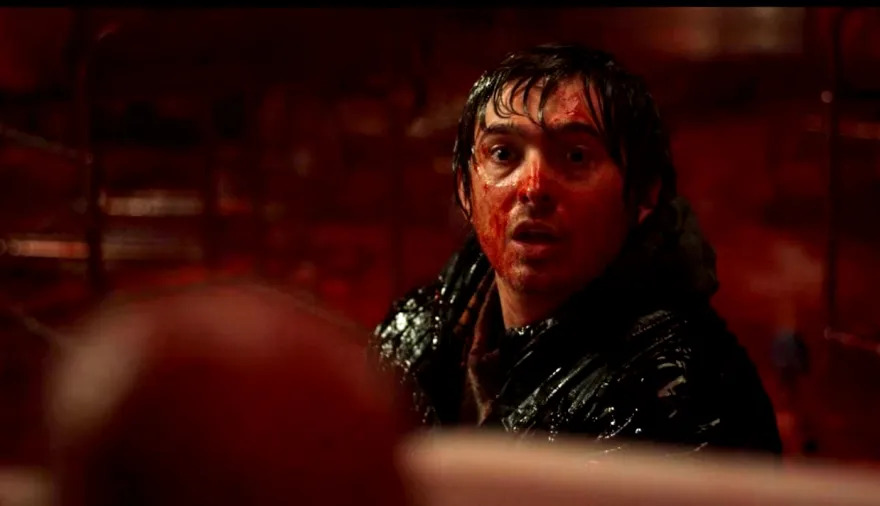
That last quality matters. There are a few moments where Bryan makes a decision I would not have made, or continues pursuing a plan I would have abandoned almost immediately. I do not mean that as a complaint so much as an expression of the movie’s central pleasure. Resident Evil is built around the gap between the decision that looks sensible from the couch and the decision a frightened person makes while the walls are closing in. Bryan’s survival instincts are not always admirable, but they are consistently watchable.
The movie’s comic instincts are less consistent. Cregger is clearly comfortable with tonal whiplash, and some of the jokes land because they arrive in the exact space where terror has made everyone slightly stupid. Other gags feel as if they are waving at the audience from outside the frame. The most obvious missteps are the moments that explain the adaptation’s own cleverness, including a few blunt reminders that what we are watching resembles a video game. We know. The movie has already made the case more convincingly through its images, its pacing, and its understanding of how a player moves through danger.
Fortunately, the jokes never completely derail the physical pleasures. Cregger understands that Resident Evil is not one tone so much as a pressure system: grimy, absurd, grotesque, and always one bad turn away from becoming much bigger than it seemed a minute earlier. The film can be funny without becoming weightless and spectacular without losing the vulnerable human scale that makes the danger matter. Its creatures and set pieces work best when they feel like immediate problems rather than pieces of franchise lore waiting to be catalogued.
And then the movie reaches its final stretch and decides that escalation is not a ladder but a dare. I will not spoil the particulars, but the ending is gloriously over-the-top in exactly the way this material demands. It does not merely raise the stakes; it commits to the kind of absurd, maximalist payoff that makes the earlier restraint feel purposeful. The result is crazy, satisfying, and just self-aware enough to let the audience enjoy the ride without turning the whole thing into a joke.
Resident Evil is not flawless. The comedy occasionally pushes too hard, and its speed can make some of its characters feel like they are being hurried past the point where a little more breathing room might have helped. But the film gets the essential thing right. It understands that adapting a game is not a matter of translating inventory screens into production design or having somebody announce the resemblance out loud. It means making the audience feel implicated in the next mistake.
Cregger gets that, and Abrams gives the movie a protagonist worth worrying about even when his decisions test the limits of common sense. I had a very good time with Resident Evil. It is brisk, tactile, funny when it allows itself to be, and increasingly unhinged when it needs to be. Its most satisfying trick is that confusion becomes a form of participation: by the time the larger nightmare comes into focus, we have already been forced to navigate it alongside Bryan.

Joshua Relyea
Founder and editor of Relyea on Film. Writing about new releases, international cinema, and the films worth returning to.